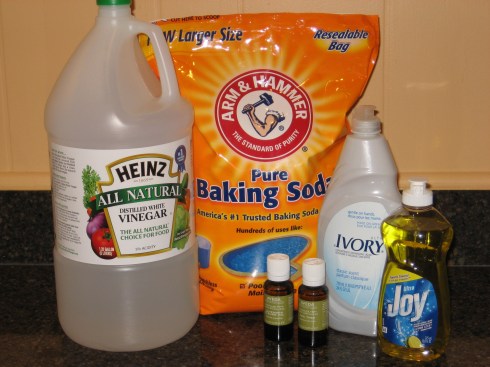
Love Your White Sink in Less Than 10 Minutes

5 May

BEFORE: Blueberry puree creates a tough stain.

AFTER: Less than 10 minutes to a beautiful white sink again.

Non-toxic cleaners are my choice in every area of my home except for one: the kitchen sink.

Although I do use a non-toxic soft scrub recipe for regular sink cleaning, I reach for something more powerful when it’s time to tackle tough stains.

It takes no time at all to re-store my sink to gleaming white and I’m going to show you how to do it.

Don’t have a white sink? This technique is fabulous for bathtubs, too!
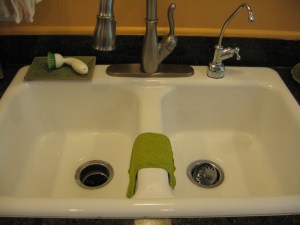
My kitchen sink on an average day

The cast-iron sink pictured here is more than 45 years old. It’s the original that came with the kitchen when we purchased our home.

We liked the feel of the original kitchen and wanted to maintain some of its charm while still giving it an update. So we kept the sink  and cabinets but replaced the flooring, countertops, appliances, and lighting.

I’d never had a white sink and loved it – at first. It didn’t take long for me to become frustrated with how easily it stains.

Today I made some fresh blueberry puree for my baby boy. When I was finished cleaning up the pots, my sink wasn’t looking too great.

For the purpose of this post, I intentionally poured the leftover blueberry liquid over the entire surface of one side of the sink.

I then let it sit for ~30 minutes so that the stain would be nice and hefty.

Fresh blueberry puree I made for my little boy

What my sink looked like afterward

THE CLEAN-UP

Here’s the process I followed for cleaning my sink: Continue reading

Quick Tip: In The Kitchen with Plain Yogurt

30 Apr

Instead of sour cream, try using low-fat or non-fat plain yogurt as a topping on your favorite dish.

Plain yogurt can also be substituted in most recipes calling for sour cream.

Enjoy a heaping spoonful, or even two – guilt-free!

Arugula Tropic Smoothie

24 Apr

Arugula Tropic Smoothie

This smoothie was exactly what I needed today: quick, healthy, a little spicy, and surprisingly delicious!

Ingredients:

— 1 cup Vanilla Coconut Milk

–2 handfuls baby arugula

–2 heaping tbsp. plain yogurt

–1 palmful frozen mango

–1 palmful frozen pineapple

–1/2 frozen banana

Optional:

–a few fresh ginger shavings

–soft tofu

Combine all ingredients in blender on high for ~ 1 minute.

This smoothie is not super sweet, although it does have a slight spicy taste to it. Try adding honey or agave nectar if you’re looking for more sweetness.

Enjoy!

Looking for more smoothie recipes? Click here.

22 Apr

I made this delicious salad this weekend for my husband’s mom who was visiting from out of town. I used fresh basil from my newly-planted herb garden and we enjoyed this refreshing fare and some delightful weather in our backyard.

I made two small changes to the recipe as it is written: 1. I simply whisked the ingredients for the dressing together in a small bowl, using finely chopped basil. 2. I substituted honey for agave nectar in the dressing and it was perfect.

I know I’ll be enjoying more evenings on our patio this summer, with this salad as a go-to meal or side!

Ms. Buena Vida's avatar{Ms. Buena Vida}

Presenting! An incredible vegan lunch for one. It’s a chunky, filling salad with a flavor punch, Ka-Pow! It’s ridiculously gooood!!

Salad-

1 avocado, chopped in chunks

1/2 C. tomatoes, diced (or grape tomatoes quartered)

1/2 C. greens (kale, arugula or spinach), chopped

1/2 C. cooked garbanzo beans

S&P to taste

Dressing-

1/2 clove fresh garlic, optional

2 T. raw apple cider vinegar (or any wine vinegar)

1/2 T. dijon mustard

1/2 T. agave nectar

1 T. olive oil

1/2 C. fresh basil

Make it-

In a mini food processor, run the garlic through. Except for the basil, pulse the remaining dressing ingredients until emulsified (kinda creamy looking). Now, add the basil and pulse a few times leaving the basil a little chunky. Like this…

In a medium bowl, lightly toss the the veggies in your delicious dressing, salt and pepper and enjoy!

I have a giveaway going on now! Check it out here.

View original post

Quick-Start Guide To Gardening in 5 Easy Steps

21 Apr

My first attempt at gardening was not fruitful. Nearly everything that I planted died within a few weeks.

The only plants that survived were some beautiful multi-colored impatiens planted in a shady spot under an oak tree in our front yard. These lovely lollipop flowers lasted about two weeks, until the deer discovered the tasty treat.

If you’re new to gardening and don’t know where to start, here are some key things I’ve discovered that will accelerate your learning and your enjoyment in your garden.

I purchased these newly-revived daisies on clearance for 75 cents each because they were near death. A little TLC and they are performing beautifully.

5 questions you should ask prior to planting anything:

What zone do I live in?

Geographies are categorized by zones, if you live in the U.S. The difference between one zone and another is determined by both the warmest and the coldest temperatures that particular region typically experiences in a given year, referred to as “plant hardiness”.

Knowing what zone you live in will help you to determine which plants will do best in-ground, in containers, or maybe not at all in your region.

You can find your zone by visiting the USDA Plant Zone Map.

What is my soil type?

This one piece of information completely changed my gardening experience and has given me so much more confidence  in gardening.

In our area, the soil is clay-like and has poor drainage. Drainage refers to how quickly water is absorbed into the soil. Most plants need good drainage in order to survive, otherwise the roots become saturated with water and rot.

A quick test you can conduct is to spray an area with a hose until it begins to saturate. If the water disappears quickly, you have good soil drainage. If you see water “pooling”, your soil drainage is poor.

You can get really technical with soil types to determine if it’s alkaline or acidic. You can purchase a kit or take a soil sample in to a local plant nursery for them to test it. I’ve never done this. However, I did ask a local nursery how to change (you’ll hear this referred to as “amending”) the soil.

In my case, the soil needs acid to break up the clay. I purchased some acidified compost, which completely changed the soil in a flower bed that was drowning in pooling water. I removed all of the bushes, amended the soil, and now enjoy some fabulous roses in that bed. I will need to continue to add compost to it every few years, as the roses will absorb the nutrients in the soil. If left untouched, the soil will eventually resort back to clay.

Based on what part of town you live in, you should be able to discover what your soil type most likely is by visiting your local nursery.

Are there native plants I can use in my garden? Continue reading

Aunt Pat’s Chicken: The Perfect Meal for Easy Entertaining

3 Apr

This easy and sure-to-please chicken dish is a modified twist on a recipe that my Aunt Pat shared with me several years ago. It’s a delicious, healthy, and inexpensive meal that is simply perfect for entertaining.

The best part about this dish is that you get to mingle with your guests while it bakes in the oven.

My Aunt Pat's Chicken Dish never disappoints!

The recipe as written is intended to serve 4 adults, so adjust the quantities and cookware to make larger portions if needed.

INGREDIENTS

–4 split chicken breasts, leg quarters, or a whole cut-up broiler. Use bone-in chicken with the skin on. It’s easily removed after cooking and makes a huge difference in both the flavor and moisture level of the dish.

–5 to 7 medium red potatoes

–½ lb. of carrots (I typically buy a bag of peeled, cut baby carrots)

–1 whole onion

–5-7 cloves of garlic, peeled but not cut (use less if you’re not a big garlic fan – we love garlic Around My Home)

–1-2 lemons (depending on how much lemon you like)

Optional: 3-4 Fresh Rosemary twigs (I typically omit the Rosemary)

–Salt & Pepper to taste

–Extra Virgin Olive oil (drizzled)

–Couple of small pats of butter

DIRECTIONS

Continue reading

Top 3 Cleaning Products I Use That You Can Make At Home

31 Mar

I’m a big fan of inexpensive, non-toxic cleaners that actually work.

Here are the top 3 that I use regularly in my own home along with popular uses and instructions on how to make each one.

Put these items on your shopping list!

1. GLASS AND WINDOW CLEANER

Magic ingredient: Joy Liquid Dish Soap

Uses: All-purpose glass cleaner for indoor and outdoor windows, mirrors, appliances, and sealed wood furniture. It shouldn’t be used on marble, which doesn’t like citrus-based products. For cleaning marble, you can substitute Ivory dish soap instead.

When using on exterior windows, hose the window down prior to cleaning in order to remove heavy dirt, pollen, or other debris.

Recipe:

–Fill a clean, empty spray bottle with water – I like the 32 oz. size. Use distilled or filtered water if you live in a hard water area.

–Add 1-2 tiny drops of Joy liquid dish soap (more is not better)

Optional – add a drop of food coloring if you simply must have blue window cleaner.

I’m not kidding, that’s it.

It really is the best glass cleaner you’ll ever use and it will cut the wax residue left by previous ammonia-based cleaners.

I purchased a bottle of Joy on sale for $1.00 at Walgreen’s. It should last me about 600 years.

It’s best to use a lint-free cloth instead of paper towels on glass. My favorite window rags are cut-up old t-shirts. You could also use micro-fiber cloths. When you wash the rags, skip the fabric softener.

I discovered this recipe through one of Angela Coffman’s readers over at the Grocery Shrink.

2. KITCHEN COUNTERTOP CLEANER, DISINFECTANT, SAFE FOR WOOD FLOORS 

This product is a staple in our house and I use it Around My Home multiple times a day. Continue reading

Design a site like this with WordPress.com
Get started